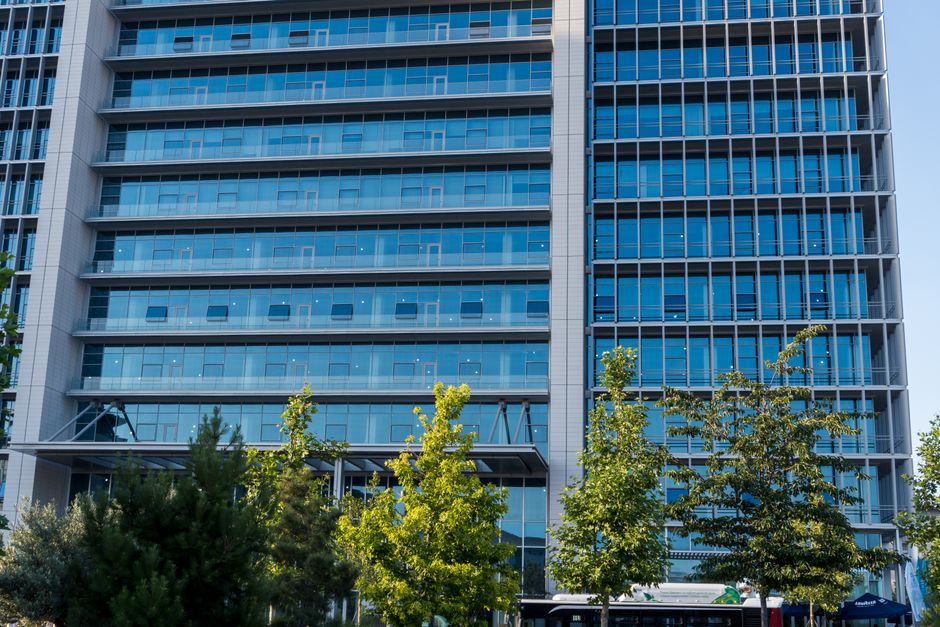
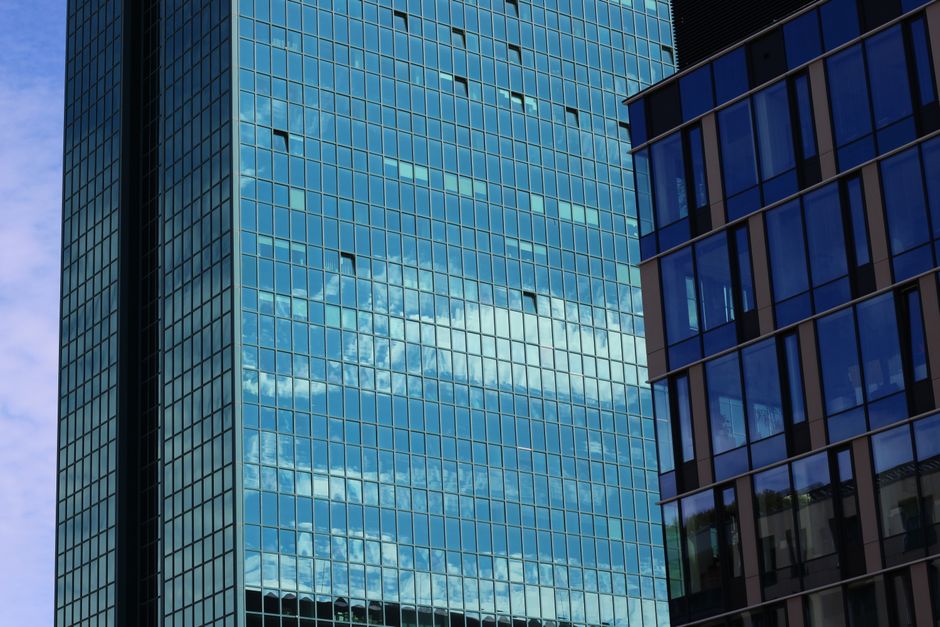
Fritted glass commercial building facades have moved well beyond novelty. Today, they represent one of the most versatile specification tools available to architects who need to balance thermal performance, occupant comfort, and compelling exterior aesthetics within a single glazing assembly. Whether you are designing a corporate headquarters in a sun-drenched southern market or a mixed-use tower navigating urban heat-island conditions, ceramic frit glass patterns offer measurable, codifiable benefits that clear glass simply cannot match on its own.
This guide walks through how frit technology works, what performance data you should request during specification, how to coordinate frit with low-e and solar-control coatings, and where code and sustainability frameworks intersect with your design intent.
Ceramic frit is a paint-like mineral compound—typically composed of ground glass particles suspended in an inorganic pigment medium—that is screen-printed or digitally applied onto the glass surface before tempering. During the heat-treating process, the frit fuses permanently into the glass surface at temperatures exceeding 600 °C, producing a finish that will not peel, fade under UV exposure, or delaminate over the service life of the facade.
The frit is almost always applied to the second surface of a monolithic lite (Surface 2 in an insulating glass unit), which protects the ceramic material from weathering while keeping it on the interior side of the outer pane. This placement is critical: frit on the exterior surface can retain dirt and moisture differently, and some coating manufacturers will void warranties if frit placement disrupts their coating stack.
The most common ceramic frit glass patterns are dot matrices—typically circular dots ranging from 3 mm to 25 mm in diameter, arranged in regular grids across the lite. Dot coverage determines how much solar radiation is intercepted: a 25 % coverage dot pattern delivers modest shading, while an 80 % coverage fritted band across a spandrel zone can approach opaque performance. Gradient patterns—where dot density increases from vision zone to spandrel—are increasingly popular because they create privacy transitions without hard visual boundaries, while also varying the shading coefficient across the lite's height.
Beyond dots, digital ceramic printing now enables stripes, geometric abstractions, photographic imagery, corporate logos, and custom branding elements to be fired directly onto tempered glass at production scale. This flexibility makes decorative architectural glass and high-performance solar control a simultaneous outcome rather than a tradeoff.
Architects who specify fritted glass for energy compliance purposes need hard numbers, and the industry has responded with standardized simulation methods. The key metrics to request from your glazing supplier are:
For a practical illustration, a 50 % coverage white ceramic frit on 6 mm clear tempered glass, combined with a high-performance low-e coating, can yield an SHGC as low as 0.22 and a VLT around 0.28—performance that rivals tinted or reflective monolithic glass while preserving far greater design flexibility.
Frit color matters thermally, not just aesthetically. White and light-colored frits reflect solar radiation, keeping absorbed energy at the glass surface and reducing heat transmission into the building. Dark frits—black, charcoal, deep navy—absorb solar radiation and re-emit it as long-wave heat toward the interior, which can partially undermine shading intent. If your design calls for dark frit for aesthetic reasons, coordinate carefully with your energy modeler, and consider positioning the frit on a ventilated cavity or pairing it with an inner low-e lite to mitigate re-radiation effects.
One of the most common specification errors with solar control fritted glass is failing to confirm compatibility between the ceramic frit and the low-e or solar-control coating in the same IGU. Most pyrolytic (hard-coat) low-e coatings applied to float glass can coexist with frit applied to an adjacent surface in the same unit. Sputter-deposited (soft-coat) low-e coatings, however, require careful placement because the coating must be sealed inside the IGU cavity and cannot be applied to the same surface as the frit without manufacturer approval.
Always request a written compatibility confirmation from both the glass manufacturer and the coating supplier before finalizing your specification. Your glazing fabricator should be able to provide simulated performance data—via LBNL WINDOW software or equivalent—for the exact surface stack you are proposing, including frit coverage density as a variable input.
For projects where dynamic solar control is a priority, it is worth understanding that fritted glass and electrochromic glazing serve complementary but distinct roles. Frit is fixed and passive; electrochromic glass adjusts tint in response to daylight or occupant controls. In some high-performance curtain wall designs, architects use fritted spandrel zones with electrochromic vision glass in the same bay to maximize adaptability while maintaining a unified facade aesthetic.
Beyond thermal performance, frit delivers spatial and brand value that no coating alone can replicate. Privacy gradient applications—where frit density increases from floor level upward or from the facade edge inward—are widely used in healthcare, hospitality, and higher education projects to modulate visibility without resorting to film or operable blinds. This approach pairs naturally with projects that also need dynamic privacy solutions; for zones where switchable performance is desirable, privacy glass systems can complement frit-defined zones elsewhere on the same facade.
Corporate campuses and institutional clients increasingly use custom frit patterns as a branding device. A university's heraldic geometry, a technology company's product iconography, or a cultural institution's archival imagery can all be translated into ceramic frit at scales ranging from individual lites to multi-story compositions. The permanence of the fired ceramic ensures that the design reads consistently over a 30- to 50-year facade lifespan.
Ceramic frit patterns have emerged as one of the most practical tools for meeting bird-friendly glazing ordinances now active in cities including New York, San Francisco, Chicago, and Toronto. Standards such as New York City Local Law 15 and the American Bird Conservancy's Bird-Friendly Building Design guidelines recommend applied elements—dots, lines, or patterns—on exterior glass surfaces at specified spacing intervals (typically 2-inch horizontal by 4-inch vertical for threat-factor compliance). Frit applied in compliant patterns satisfies these requirements without any added film or hardware, and the fired ceramic surface ensures the pattern cannot be removed by maintenance crews or building occupants.
Confirm that your frit pattern specification references the applicable local ordinance and that your glazing supplier can provide third-party threat-factor test data if required by the authority having jurisdiction.
For a deeper look at how glazing selection interacts with energy codes, envelope performance, and curtain wall system design, explore Greenlite's building envelope glass selection guide, which walks through performance tradeoffs across the full spectrum of architectural glass types.
Specifying fritted glass commercial building facades involves more variables than most glazing decisions—frit density, color, coating compatibility, regulatory compliance, and long-term aesthetic intent all need to align before a single lite goes into production. Greenlite Glass Systems brings deep technical expertise and a proven project portfolio to help architects and building owners navigate every layer of that complexity. Whether you are in early schematic design or preparing construction documents, our team can provide performance modeling, specification support, and coordination with your curtain wall fabricator. Contact Greenlite Glass Systems today to discuss your facade requirements and put ceramic frit's dual performance and design potential to work on your next project.