For facility managers and building owners, glass facade maintenance on commercial buildings is one of the most consequential — and most frequently deferred — responsibilities in the entire asset management lifecycle. A glazing system that performs flawlessly at ribbon-cutting can quietly deteriorate over years of UV exposure, thermal cycling, precipitation, and pollution. By the time visible failures appear, the remediation costs are often multiples of what a structured maintenance program would have cost over the same period. The good news: with the right inspection intervals, a clear glazing system inspection checklist, and an understanding of where facade systems commonly fail, building teams can stay well ahead of the curve.
Glass facades are among the most capital-intensive components of any commercial building envelope. Curtain wall systems, structural glazing assemblies, and high-performance insulated glass units represent significant upfront investment — and their long-term performance directly influences operating costs, occupant comfort, energy efficiency, and property valuation.
Deferred maintenance compounds. A hairline failure in a sealant joint allows moisture ingress. That moisture compromises the insulated glass unit's edge seal, leading to condensation between panes and loss of thermal performance. Unchecked, the same moisture migrates into framing cavities, promotes corrosion in aluminum or steel substrates, and eventually requires full panel replacement. What begins as a $300 sealant repair becomes a $30,000 remediation project — or worse, a liability event if a compromised lite fails structurally.
Commercial glass facade upkeep is not merely a maintenance budget line. It is a risk management strategy and a direct contributor to long-term building asset value.
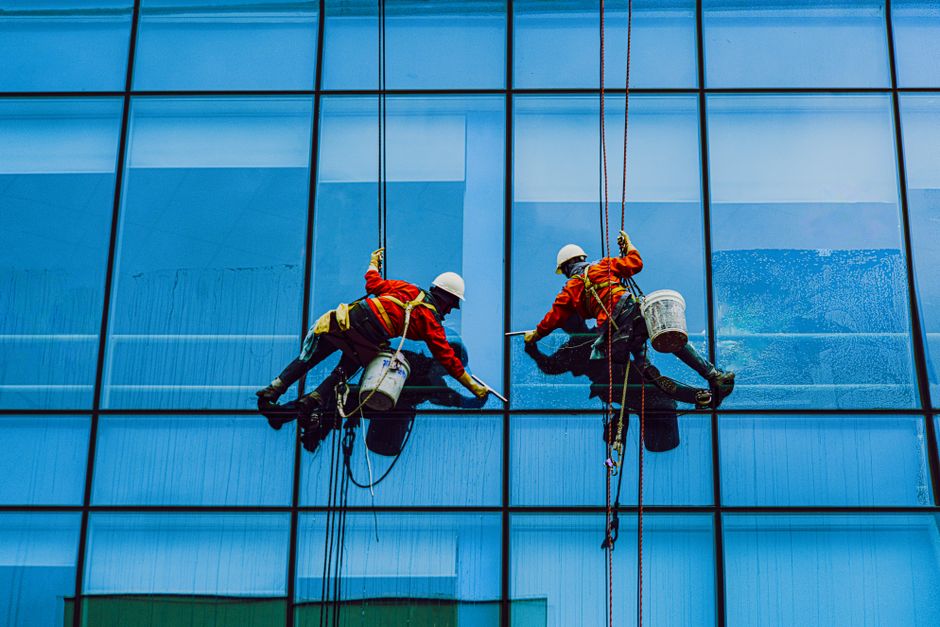
Cleaning is the most visible component of any facade maintenance program, but its value extends well beyond aesthetics. A disciplined curtain wall cleaning schedule creates regular, close-contact access to the facade surface — and that proximity is your earliest warning system for emerging issues.
Cleaning frequency should be calibrated to building location and exposure conditions:
Cleaning crews should be briefed to flag anomalies — visible seal failures, cracked or delaminating glass, discolored silicone, or standing water in framing pockets — for follow-up by a qualified glazing inspector. The cleaning event is only part of the value; the intelligence it generates about facade condition is equally important.
Annual professional inspections by a qualified glazing consultant or the system's original manufacturer are the backbone of any credible maintenance program. Ad hoc visual checks from ground level are insufficient for identifying the failure modes that matter most. A rigorous glazing system inspection checklist should address the following areas:
Silicone sealants — both structural and weatherseal — have finite service lives, typically 20 to 30 years under normal conditions, but accelerated degradation occurs with UV overexposure, movement beyond design limits, or incompatible cleaning chemicals. Inspectors should probe for adhesion loss, cohesive cracking, crazing, and hardening that indicates loss of elastomeric properties. Gasket compression seals in pressure-plate systems should be checked for compression set, tearing, and displacement from their channels.
Edge seal failure in IGUs manifests as fogging, visible condensation between lites, or mineral deposits forming at the glass perimeter. Inspectors should document the location and extent of any failed units. Thermal imaging can supplement visual inspection to identify units with compromised thermal performance that are not yet visibly fogged.
Aluminum framing should be checked for evidence of water staining or corrosion at weep hole locations, fastener corrosion at anchor points, and movement at expansion joint locations. For stick-built curtain wall systems, inspect mullion-to-transom connections. For unitized systems, inspect stack joint and shear block conditions. Any evidence of racking or differential movement between panels warrants immediate structural review. If you are working with a complex glazing assembly and need to reference original system specifications, Greenlite Glass's full range of architectural glazing systems provides detailed technical reference for installed products.
High-performance coatings — low-e, solar control, frit patterns — can be damaged by abrasion, chemical attack, or delamination. Inspectors should assess coating uniformity visually and document any areas of peeling, crazing, or discoloration. For electrochromic and other dynamic glazing systems, functional testing of switching performance should be included alongside physical inspection.
The facade system does not perform in isolation. Inspect all interface conditions between the glazing system and adjacent roofing, masonry, EIFS, or metal panel assemblies. Flashing laps, sealant terminations, and counter-flashing conditions are common entry points for water that ultimately manifests as damage within the glazing system itself.
Understanding where glass facade systems most commonly fail allows inspection resources to be prioritized effectively. The most prevalent failure modes in North American commercial buildings include:
For a deeper look at how glazing system design decisions made at the specification stage influence long-term performance outcomes, this overview of architectural glass curtain wall design considerations provides valuable context for facility teams working alongside their design consultants.
While building-specific conditions should always govern the final program, the following interval framework represents industry best practice for commercial glass facade upkeep across most building types:
Post-extreme-weather events — significant wind events, hail, seismic activity — should always trigger an unscheduled inspection regardless of where the building falls in its regular cycle.
A maintenance program without documentation is a program that cannot be measured, improved, or transferred. Facility managers should maintain a running log of every inspection, cleaning event, repair, and replaced component, tagged to specific facade zones or panel grid references. Photographic records taken from consistent vantage points at each inspection cycle allow condition changes to be tracked over time — a capability that becomes invaluable when assessing whether a developing condition is stable or actively progressing.
Retaining original as-built drawings, product data sheets, and warranty documents is equally important. When remediation is needed, knowing the exact product specifications of the original installation — glass makeup, sealant type, coating specification — is essential for sourcing compatible replacement materials and maintaining system integrity. For access to technical resources and product documentation that can support your records management, Greenlite Glass's downloads library offers a range of technical reference materials.
Building facade long-term performance is not the product of any single decision — it is the cumulative result of specification quality, installation workmanship, and the consistency of the maintenance program that follows. Facility managers who treat the facade as a living system requiring ongoing stewardship — rather than a static building component — consistently achieve longer service lives, lower lifecycle costs, and stronger asset valuations.
The most effective programs combine a documented inspection schedule, trained eyes on the facade at regular intervals, responsive repair protocols, and a capital planning horizon that anticipates major component renewals well in advance of failure.
If you are establishing or upgrading a glass facade maintenance program for your commercial property, the team at Greenlite Glass Systems brings deep expertise in architectural glazing system design, performance, and longevity. Contact Greenlite Glass Systems to speak with a glazing specialist about developing an inspection and maintenance strategy tailored to your building's specific systems and performance requirements.