When a glazing system underperforms — fogged lites, compromised U-values, failed warranties — the root cause almost never traces back to the glass itself. It traces back to insulating glass unit manufacturing quality decisions made long before installation: the spacer profile chosen, the desiccant loading ratio, the sealant chemistry, the fill gas retention rate, and the rigor of end-of-line quality control. For architects and glazing specifiers working on commercial projects, understanding these variables isn't a technical luxury — it's a specification necessity.
This article breaks down the mechanical and chemical realities that separate a high-performance IGU from a unit destined for premature seal failure, and what to look for when evaluating a fabrication partner.
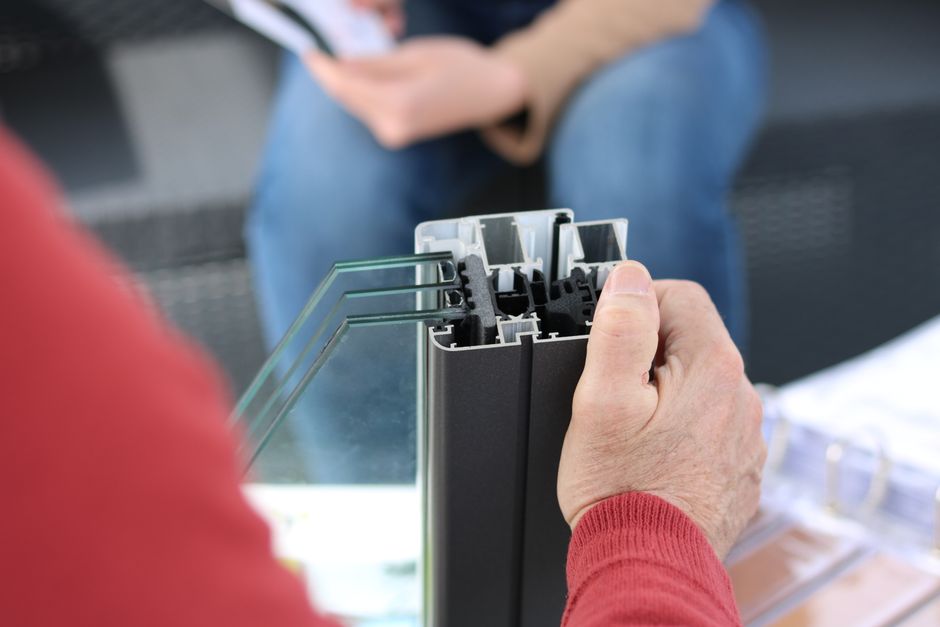
An insulating glass unit is, at its simplest, two or more lites of glass separated by a spacer, hermetically sealed at the perimeter, and filled with a gas — typically air, argon, or krypton — that provides thermal resistance. But "hermetically sealed" is doing a lot of heavy lifting in that sentence. The integrity of that seal is the entire performance proposition.
IGU fabrication standards — particularly those governed by ASTM E2190 and the IGMA (Insulating Glass Manufacturers Alliance) certification program — establish minimum thresholds for dew point performance, seal durability, and gas retention. However, meeting minimums is not the same as manufacturing for longevity. High-performance fabrication begins with dimensional accuracy.
Spacer width tolerances directly affect the air cavity depth, which in turn determines thermal resistance. A nominal 1-inch spacer system that varies by even ±0.5mm across a large commercial unit introduces inconsistency in edge-zone conduction — the area responsible for a disproportionate share of total heat loss in any glazed assembly. In curtain wall and storefront applications, where units are large and edge-to-area ratios are significant, these tolerances compound quickly.
Glass flatness and bow are equally critical. Excessive bow in a lite creates uneven pressure on the primary seal, accelerating fatigue at stress concentration points. Reputable fabricators measure bow against ASTM C1036 tolerances and reject units that fall outside specification before assembly — not after.
The spacer is the most thermally vulnerable component in any IGU assembly. Traditional aluminum spacers, while dimensionally stable and cost-effective, are highly conductive and create a pronounced thermal bridge at the glass edge. In cold climates, this results in condensation on interior glass edges — a performance failure that occupants notice immediately and that accelerates seal degradation over time.
Warm-edge spacer systems — including foam-based, thermoplastic, and hybrid stainless-steel designs — significantly reduce edge conduction. The performance difference is measurable: warm-edge spacers can improve the overall window U-factor by 0.02 to 0.05 BTU/hr·ft²·°F compared to aluminum equivalents, depending on frame system and climate. For large commercial glazing programs, this delta has real energy cost implications.
Spacer material also affects seal compatibility. Not all primary sealants — typically polyisobutylene (PIB) — adhere equally well to all spacer substrates. A fabricator that mixes spacer types without validating sealant adhesion data is introducing a failure mode that may not manifest for two to five years, well within the unit's expected service life but potentially outside a project's defect liability window.
For a broader look at how glazing system selection influences building envelope performance, our building envelope glass selection guide covers the key decision points architects face when specifying for energy, acoustics, and durability simultaneously.
The dual-seal system is the industry standard for commercial IGU fabrication — and for good reason. The primary seal (PIB) controls moisture vapor transmission and gas retention. The secondary seal (typically silicone, polysulfide, or polyurethane) provides structural integrity and adhesion to the glass lites. Each performs a distinct function, and the failure of either compromises the unit.
Glass unit seal failure prevention begins with understanding how these sealants age. PIB is chemically stable and highly effective as a vapor barrier, but it is not structural. It flows under sustained load and must be supported by the secondary seal to maintain uniform thickness and contact. Secondary sealants, meanwhile, are subject to UV degradation, thermal cycling fatigue, and chemical incompatibility with adjacent materials — particularly certain coatings and cleaning compounds.
Silicone secondary seals offer the best UV resistance and the widest service temperature range, making them the preferred choice for exposed structural glazing applications. Polysulfide offers superior adhesion to some substrates and better resistance to certain solvents, but degrades more rapidly under UV exposure. Polyurethane occupies a middle ground but is sensitive to moisture during cure — a fabrication condition issue, not a material limitation.
Quality fabricators conduct adhesion tests per ASTM C794 and destructive peel tests on sample units to verify that the dual-seal system is performing as a unified assembly, not just as two independent components. This is a detail worth asking about when evaluating a glazing fabrication partner.
Argon gas fill glass units have become the commercial glazing standard for good reason. Argon is denser than air, reducing convective heat transfer within the cavity and improving the center-of-glass U-value by approximately 0.05 BTU/hr·ft²·°F in a standard 1-inch IGU configuration. The thermal benefit is real — but only if the gas is retained.
IGMA standards require that certified IGUs retain at least 90% of their initial gas fill after 10 years of service. Achieving that retention rate in the field depends almost entirely on the quality of the primary seal and the accuracy of the fill process. Units that are underfilled at fabrication — a common cost-cutting measure — begin their service life already compromised. Units with microscopic PIB discontinuities leak gradually, and their thermal performance degrades invisibly until moisture infiltration begins and fogging becomes apparent.
Insulating glass performance longevity is therefore not just a function of which gas is specified — it's a function of how confidently a fabricator can demonstrate fill accuracy and seal integrity. Gas fill percentage verification, using techniques such as laser-based gas detection equipment, should be a standard end-of-line QC step, not an exception.
The most technically sound IGU design can still fail if fabrication processes lack discipline. Quality control in IGU manufacturing is not a single inspection point — it is a continuous system that begins with raw material verification and ends with documented traceability for every unit shipped.
Critical QC checkpoints include:
Fabricators operating under IGMA certification or equivalent third-party auditing programs are required to maintain documented evidence of these protocols. For high-stakes commercial projects — hospitals, universities, institutional facades — specifying IGMA-certified fabrication is a straightforward way to establish a quality baseline in the contract documents.
To see how these manufacturing principles translate into real project outcomes across institutional and commercial applications, explore our completed projects portfolio, which includes glazing programs at facilities ranging from university campuses to transit infrastructure.
The gap between a 10-year IGU warranty and a 25-year IGU warranty is not primarily a legal distinction — it is a manufacturing discipline distinction. Fabricators who invest in process control, material qualification, and third-party certification can stand behind extended warranty terms because their production data supports them. Those who compete primarily on unit price are, in effect, transferring long-term performance risk back to the project.
For glazing consultants and architects writing performance specifications, the practical implication is clear: IGU fabrication quality criteria belong in the spec, not just in the submitted warranty document. Requiring IGMA certification, specifying warm-edge spacer systems by performance class rather than by product name, establishing minimum gas fill retention requirements, and mandating documented QC records as a submittal item are all enforceable specification strategies that meaningfully reduce long-term risk.
It is also worth noting that IGU performance does not exist in isolation. As explored in our article on energy-efficient glass facades and HVAC cost implications, the thermal performance of the glazing unit directly influences mechanical system sizing, operational energy costs, and compliance with increasingly stringent green building standards — making the case for quality fabrication a financial argument as much as a technical one.
At Greenlite Glass Systems, insulating glass unit manufacturing quality is not an afterthought — it is the foundation on which every glazing solution we deliver is built. From spacer selection and edge seal chemistry to gas fill verification and documented quality control protocols, our fabrication processes are designed to support the long-term performance and warranty confidence that commercial projects demand. If you are specifying a glazing program and want to discuss how manufacturing quality translates into real-world outcomes for your project, contact our team to start the conversation.