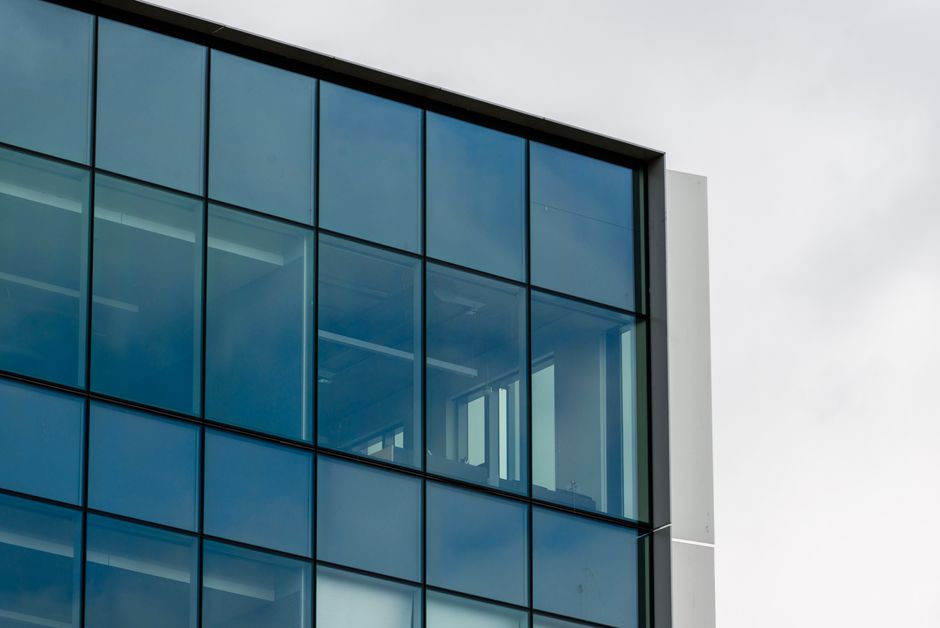
When project teams map out their path to LEED certification, glazing is often treated as a single line item—something to optimize for energy code compliance and then move on. That's a significant missed opportunity. LEED credits architectural glazing strategies touch at least five distinct credit categories under both LEED v4 and v4.1, meaning a single informed glass selection decision can generate cascading points across Energy & Atmosphere, Indoor Environmental Quality, Sustainable Sites, Materials & Resources, and Innovation. For architects and project teams serious about maximizing certification scores, understanding exactly how coating types, visible light transmittance (VLT) ratios, solar heat gain coefficients (SHGC), and thermal performance specifications map to specific LEED credits is not optional—it's a competitive advantage.
This guide breaks down that mapping in concrete terms, so your team can walk into glazing specification conversations with a clear point-optimization framework rather than a vague sustainability checklist.
The EA category is where glass performance specs have the most direct and quantifiable impact. Under LEED v4 EA Credit: Optimize Energy Performance, projects earn points on a sliding scale based on the percentage improvement over the ASHRAE 90.1 energy baseline. Glazing is one of the primary variables in that calculation, and the levers are specific.
A curtain wall or window assembly's U-factor determines how much heat flows through the glass regardless of solar conditions. In heating-dominated climates, specifying triple-glazed units or high-performance double-pane assemblies with U-factors at or below 0.20 BTU/hr·ft²·°F can shift a building's whole-building energy model by 8–15% compared to code-minimum glazing—often the difference between 3 and 6 EA optimization points.
SHGC controls solar heat gain. In cooling-dominated or mixed climates, low-SHGC coatings (0.20–0.30 range) dramatically reduce mechanical cooling loads. However, context matters: a south-facing facade in Minneapolis may benefit from a higher SHGC in winter to capture passive solar gain, while the same facade in Phoenix demands aggressive solar control year-round. The EA credit rewards energy modeling precision, so working with coatings that allow SHGC to be tuned by orientation—rather than applying a blanket specification—tends to produce higher point yields.
Electrochromic and other dynamic glazing technologies represent a step-change opportunity for EA points. Because they modulate SHGC in real time—transitioning from clear states (SHGC ~0.40) to fully tinted states (SHGC ~0.09) in response to solar intensity and occupancy signals—they can reduce peak cooling loads by 20–30% compared to static low-e glass. That level of performance improvement, when properly modeled, can push a project from the 8-point tier to the 12-point tier under EA Optimize Energy Performance. For a deeper look at how these systems work in practice, read Greenlite's detailed overview of electrochromic smart glass for commercial buildings, which covers performance benchmarks and integration considerations that directly support energy modeling inputs.
The IEQ category is the second major arena where sustainable glazing LEED points accumulate, specifically through IEQ Credit: Daylight and IEQ Credit: Quality Views.
LEED v4.1 IEQ Daylight credit offers two compliance paths: simulation and measurement. Under the simulation path, projects must demonstrate that at least 55% of regularly occupied floor area achieves spatial Daylight Autonomy (sDA) of 300 lux for 50% of annual occupied hours. VLT is the primary glazing variable that determines whether a given window-to-wall ratio (WWR) can achieve that threshold without overheating or glare penalties.
As a practical guideline: a WWR of 40–50% with a VLT of 0.40–0.55 typically achieves the sDA threshold in most North American climate zones for perimeter zones up to 15 feet deep. Pushing VLT above 0.55 can increase sDA scores but introduces Annual Sunlight Exposure (ASE) exceedance risk—too much direct sun on work surfaces—which the credit penalizes. The optimal specification zone for most commercial office projects sits between VLT 0.40 and 0.55 with spectrally selective low-e coatings that separate visible transmittance from solar heat gain, allowing daylight harvesting without thermal penalty.
The Quality Views credit requires that 75% of regularly occupied floor area have a direct line of sight to the outdoors through vision glazing. This credit specifically rewards clear vision glass—not spandrel, not heavily tinted panels. Specifying high-clarity low-iron glass for vision zones, with coatings that maintain neutral color rendering, directly supports this credit. Projects that default to heavily tinted bronze or gray glass for solar control often sacrifice Quality Views points unnecessarily when spectrally selective coatings would have achieved equivalent SHGC performance with higher clarity and color neutrality.
For project teams working through the full range of building envelope glass decisions, Greenlite's building envelope glass selection guide provides a comprehensive framework that aligns performance specifications with both code requirements and green certification targets.
The MR category is where LEED v4 glass performance credits increasingly reward supply chain transparency rather than just material properties. Two credits are most relevant to glazing specifications.
MR Credit: Building Product Disclosure and Optimization—Environmental Product Declarations (EPDs) awards points when at least 20 products from at least five manufacturers have publicly available EPDs. Glass manufacturers who publish product-specific or industry-average EPDs allow their products to count toward this threshold. When specifying glazing systems, requiring EPD documentation from suppliers is now standard practice on any project targeting LEED Silver or above. Third-party verified, product-specific EPDs carry greater weight than industry-average EPDs under the optimization path, so confirming the EPD type with your glazing supplier before specification is essential.
Flat glass manufacturing typically incorporates 20–30% post-consumer and pre-consumer recycled cullet. While LEED v4 shifted away from prescriptive recycled content credits toward the broader disclosure framework, recycled content data disclosed through EPDs or manufacturer declarations still contributes to the MR sourcing credits. Specifying glazing from manufacturers who document and disclose recycled content percentages positions those products to contribute to multiple MR point pathways simultaneously.
Two additional credit categories round out the commercial glass LEED compliance picture.
Exterior glazing that is highly reflective at night can contribute to light pollution from interior sources. While this credit primarily targets lighting system design, specifying glass with lower exterior reflectance values (below 15% in the visible spectrum) for facades adjacent to sensitive areas—residential zones, dark sky preserves—demonstrates compliance intent and supports the project's overall SS narrative.
IEQ Credit: Thermal Comfort rewards projects that demonstrate compliance with ASHRAE 55-2010 and implement occupant comfort monitoring. High-performance glazing directly improves mean radiant temperature (MRT) conditions near perimeter facades. Occupants seated within 5 feet of a poorly performing curtain wall experience radiant asymmetry that no HVAC system can fully compensate. Specifying assemblies with U-factors below 0.25 eliminates most radiant discomfort in perimeter zones and strengthens the thermal comfort modeling documentation required for this credit.
Projects that demonstrate exemplary performance—exceeding the daylight sDA threshold of 75% rather than 55%, for example—can earn Innovation credits. Dynamic glazing systems that respond to occupant controls also support the Pilot Credit for human experience and well-being pathways that LEED v4.1 has expanded. These are worth modeling explicitly rather than discovering post-design.
The most effective approach to maximizing LEED points through glass selection is to treat glazing as a multi-credit optimization problem from the earliest schematic design phase. That means running energy models with multiple glazing scenarios before finalizing facade geometry, aligning VLT specifications with daylighting simulation outputs, and requiring EPD and recycled content documentation as part of the glazing procurement package—not as an afterthought during construction administration.
It also means selecting a glazing partner who understands these credit pathways and can provide the performance data, product documentation, and technical support your LEED documentation requires. To see how these strategies have been applied across complex real-world projects, explore Greenlite's work on the Stanford McMurty Building, a project where high-performance glazing played a central role in achieving the project's sustainability goals.
Ready to build a glazing specification strategy tailored to your project's LEED targets? Contact Greenlite Glass Systems to connect with our technical team. We work directly with architects, sustainability consultants, and project managers to align glass performance specifications with your exact certification roadmap—from schematic design through LEED documentation submission.